Journey-Aware Bidding is a new Smart Bidding feature in Google Ads for Search campaigns using Target CPA.
This new feature allows the Google Ads bidding algorithm to learn from conversion goals within your CRM across the entire lead-to-sale journey.
Before we get started, here are the key takeaways to keep in mind:
- Success requires accurate conversion tracking across the entire customer journey, including qualification, quotation and closed-won deals.
- Advertisers must map journey stages, create conversion actions, import offline conversions, then apply a Target CPA bidding strategy.
- Your final conversion should be marked as a Primary conversion in Google Ads, while intermediate steps should be labeled as Secondary.
- Allow 2–4 weeks of learning time with at least 3 months of clean CRM data before evaluating campaign performance.
- White Peak Digital’s Google Ads management team can help Australian businesses audit their Google Ads tracking, CRM data feed and test this new bidding model safely.
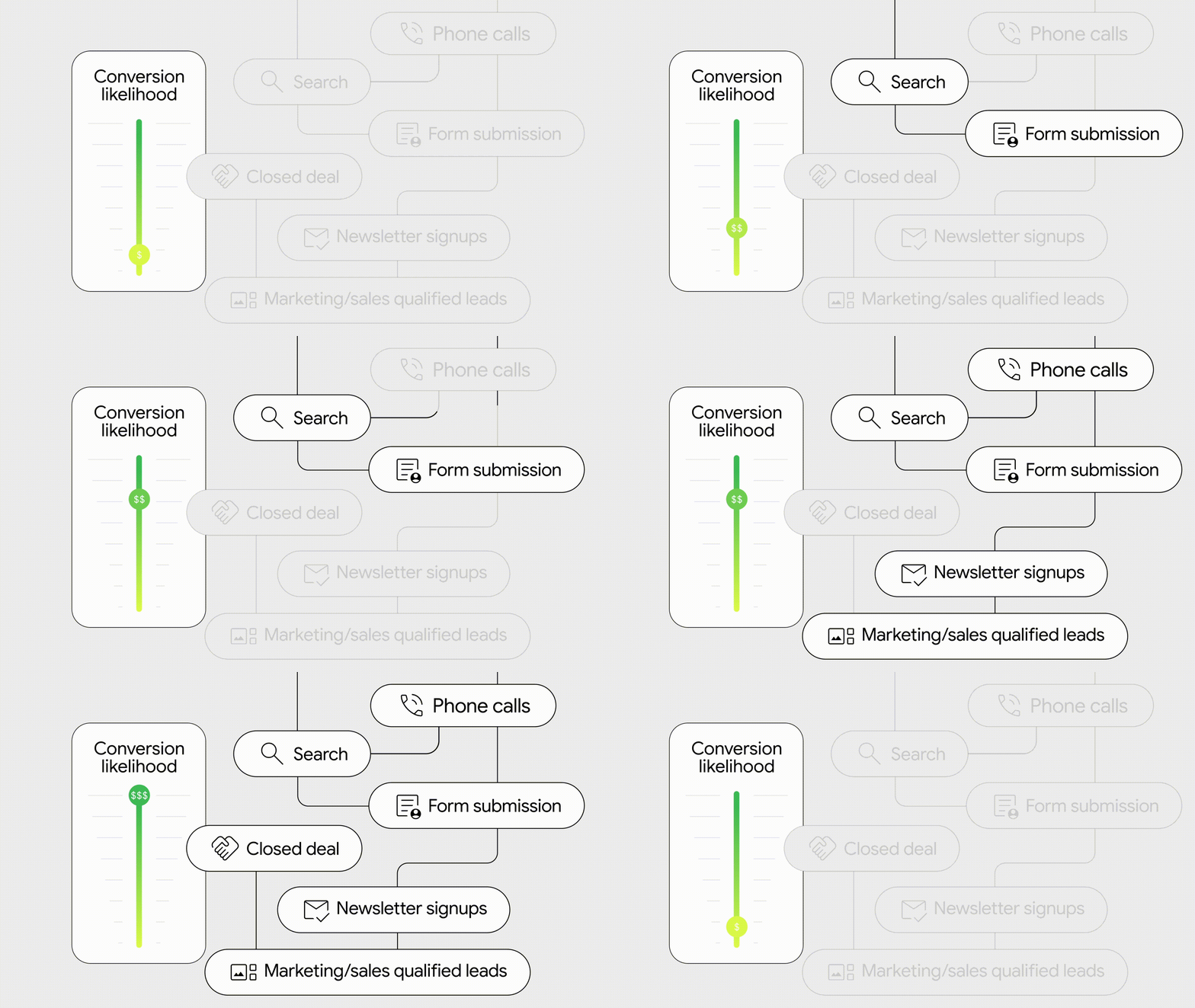
What Is Journey-Aware Bidding In Google Ads?
Journey-Aware Bidding is an innovative Google Ads beta announced during the 2026 Google Marketing Live event. It is designed specifically for Search campaigns using Target CPA.
This model focuses on the entire customer journey rather than just a single final conversion event.
Instead of optimising only for initial form fills, this model allows the algorithm to read multiple data points. These include submitted lead forms, phone calls, qualified leads and closed deals from within your CRM.
It helps the system better understand true downstream business outcomes. By considering real business outcomes alongside micro conversions, it can improve lead quality and drastically reduce spam submissions.
Key benefits include:
- Better prediction accuracy across complex customer journeys
- Stronger use of offline conversion tracking
- Less dependence on crude lead scoring
- Smarter bidding choices based on paying customers

Who Should Use Journey-Aware Bidding?
Journey-Aware Bidding is particularly beneficial for industries with long or complex consideration periods, especially where sales cycles exceed 14–30 days and both marketing and sales touch the same lead.
Good fits include:
- B2B SaaS and lead gen campaigns
- Professional services like law firms and accountants
- Healthcare and education providers
- High consideration home services such as solar or renovations
You ideally need several dozen primary conversions per month and stable tracking.
Simple ecommerce setups, short paths to purchase or performance max campaigns usually suit Target ROAS or other value-based approaches better than this new model.

Step 1: Map The Entire Customer Journey
Before adjusting your bidding model in Google Ads, you must identify every meaningful touchpoint a prospect takes during your typical sales cycle.
Advertisers should map every stage from front-end events like form submissions down to end-stage events like closed-won deals.
Example for a service-based company:
- Initial ad click
- Website micro-engagement
- Lead form submission
- Sales qualified lead
- Quote or proposal sent
- Closed won or closed lost
Each meaningful step must become a specific conversion action with a clear name.
Mislabelling your data can lead to poor performance because the platform needs to understand different stages across the entire funnel.
Step 2: Build A Strong Tracking Foundation
Accurate data is essential for implementing Journey-Aware Bidding effectively. Any weak tracking signal can mislead the smart bidding systems and waste your budget.
You must set up online conversion actions for:
- Lead form submissions
- Calls from ads and your website
- Micro conversions like downloading a brochure
Conversion actions represent the exact events. Conversion goals then group these related actions into categories such as booked appointments or qualified leads.
Enhanced conversions should also be implemented to maintain high matching accuracy by using hashed first party details such as an email address.
Step 3: Import Offline Conversions & CRM
Importing offline conversions and CRM stages into Google Ads is crucial for lead generation accounts.
It allows the bidding algorithm to learn from multiple funnel stages and enhances overall campaign effectiveness.
Connect your preferred CRM through Google Ads Data Manager or a native integration.
You must capture the Google Click Identifier (GCLID) parameter from every lead so offline stages can match back to the original ad clicks.
Create offline conversion actions such as:
- Qualified lead
- Proposal sent
- Closed-won deal
- Closed-lost deal
Importing this data daily into Google Ads helps connect campaign performance to qualified pipeline revenue rather than just raw lead volume.
Ensure you use accurate timestamps and assign realistic conversion values where possible.

Step 4: Configure Your Conversion Actions
Primary conversions dictate your bid optimisation directly. Secondary conversion actions remain visible to the algorithm to provide context but do not define the main optimisation target.
A recommended lead generation structure:
- Choose either closed-won deals or qualified leads as the primary conversion goal
- Set all other conversion actions as secondary goals
In Google Ads, go to Goals → Summary to change your actions Primary or Secondary status.
Journey-Aware Bidding allows Google Ads to learn from both biddable primary conversions and non-biddable conversion goals across the entire lead-to-sale journey.
Step 5: Set Up Target CPA Bidding Strategy
Journey-Aware Bidding is currently integrated into Target CPA as a smart bidding strategy for Search campaigns, with broader availability expected after the closed pilot and broader rollout.
To set it up:
- Go to Tools → Budgets and bidding → Bid strategies.
- Create a new Target CPA strategy
- Apply a clear naming convention
- Add similar Search campaigns with the same customer journey
- Set the Target CPA (Google will provide a recommendation after Search campaigns are assigned)
Ensure you set your initial Target CPA based on your cost per qualified lead rather than the cost per form submission if they differ significantly.
Keep an eye out for new pacing controls and daily spending limits as more features roll out for Journey-Aware Bidding.
Step 6: Let The Model Learn & Optimise
Google requires time to correlate micro actions with ultimate key performance indicators. The system typically needs 2-6 weeks of consistent data after you implement these changes.
You should avoid major budget or target changes during this period.
Metrics to watch closely:
- Cost per qualified lead
- Pipeline volume
- Offline conversion rate from lead to sale
- Conversion funnel drop offs
As a guide, aim for 30–50 primary conversions per month per portfolio/bid strategy.

Common Pitfalls With Journey-Aware Bidding
Many accounts fail because the data foundation is weak, not because the bidding strategy is bad.
Common issues include:
- Spam form fills being counted as a success
- Double counting the same lead
- Missing or delayed offline data imports
- Mismatched conversion windows
Auditing the conversion measurement layer for accuracy is crucial.
This includes checking for double-counted conversions, missing offline imports and mismatched conversion windows to ensure Smart Bidding performs optimally.
Frequently Asked Questions
Is Journey-Aware Bidding available to every Google Ads account now?
No. As of May 2026, Journey-Aware Bidding is in beta for Search campaigns using Target CPA, the timeline and rollout so far has been:
- Late 2025: Closed testing of Journey-Aware Bidding began with selected advertisers.
- May 7th, 2026: Beta announced for Search campaigns using Target CPA on Google’s blog.
- May 15th, 2026: Google announces expansion to additional campaign types at Google Marketing Live.
- Late 2026: Continued rollout expected across campaign types and Google Ads accounts.
Do I need offline conversion tracking to use Journey-Aware Bidding?
It may not be technically mandatory, but offline conversion tracking is where the feature becomes valuable. Without offline conversions, Google mostly sees front-end actions like form fills and cannot reliably separate poor leads from qualified pipeline.
Can I use Journey-Aware Bidding for eCommerce or short customer journeys?
Usually no. Journey-Aware Bidding is built for lead gen and complex customer journeys. eCommerce advertisers should first focus on feed quality, conversion value accuracy, Max Conversion Value and Target ROAS.
How long should I test Journey-Aware Bidding before deciding if it works?
Allow the initial 2–4 week learning period, then test for another 4–6 weeks if possible. Compare cost per qualified lead, pipeline value and closed revenue against a clear pre-test baseline.
What if my account doesn’t have enough conversions yet?
Start by improving landing pages, simplifying forms and consolidating campaigns. If you need help, White Peak Digital can audit your website setup and help you get ready for advanced Google Ads bidding.