Search engines are no longer the only gateway connecting businesses with prospective customers online.
AI chatbots now present a completely new traffic channel that requires a fresh strategic approach for your landing pages.
Understanding the real dynamic between AI search vs traditional organic search traffic is essential for website owners and marketing teams in 2026.
Recent industry benchmarks show dramatic differences in how visitors from these two sources behave and convert on websites.
This article breaks down the latest research from industry leaders and provides actionable steps to help your brand capture high-intent buyers across both search ecosystems.
AI Search vs Organic Search Traffic
Traditional organic search relies on users typing phrases into Google or Bing and scanning a list of results.
Visitors usually click around multiple pages to piece together information during early research.
AI search operates through conversational prompts across tools like ChatGPT, Gemini and Google AI Overviews.
These platforms aggregate data from across the web to synthesise direct answers and recommend targeted products.
Rather than replacing traditional discovery, AI search is more often sitting alongside standard search engines.
Organic search delivers top-of-funnel traffic while AI search engines send pre-qualified visitors who are far closer to making a purchase.
To capture both audiences, modern websites require clean technical structures and strategic web design strategy to turn initial interest into conversions.

Latest AI Search Research & Traffic Data
Data published by Ahrefs reveals a dramatic contrast in user behaviour. Their research showed AI search accounted for just 0.5% of total site traffic, yet it generated 12.1% of all new signups.
This represented a conversion rate roughly 23x higher for Ahrefs than their standard organic traffic.
Although click-through volumes from generative models are lower, the visitors who do click through demonstrate exceptional commercial intent.
The latest data from Shopify in August 2026 further reinforces these findings.
Across millions of storefronts, AI-referred sessions grew by 197% year-on-year, while traditional organic search grew by 12% on a much larger base.
Shopify found that AI-referred visitors converted 80% better overall than organic search arrivals.
AI traffic converted over 200% higher than the standard rate in technical categories like consumer electronics.
Furthermore, AI-referred shoppers on Shopify websites spent more, generating average order values approximately 14% higher than organic search.
They also introduced net-new buyers at 1.3 times the rate of traditional channels.
This phenomenon occurs because generative tools compress the sales funnel.
Instead of browsing dozens of websites, users evaluate options inside the AI chat interface before clicking directly to a buying page.
Proprietary Data: For the month of August, our agency website saw a 247% higher conversion rate from “AI Assistant” traffic versus “Organic Traffic” according to Google Analytics.

Buyer Journey Compression & Landing Page Arrivals
Shopify’s research highlights that 50% of AI-driven visitors land directly on product detail pages.
In contrast, traditional organic search sends only 20% of its traffic directly to product pages.
When visitors land directly on a product or service page, your website must instantly validate their research.
High-performing pages must present clear specs, transparent pricing and immediate social proof.
Key Insight: This redefines how our web design agency is approaching commercial pages. We now build every key product and service page as a standalone conversion funnel. Because compressed user journeys bypass traditional browsing entirely, entry pages must instantly validate AI-driven research and provide a clear path to convert.
Implementing targeted conversion rate optimisation on every key landing page ensures that these high-intent arrivals find the exact answers and trust signals required to complete a transaction without bouncing.
Research from AirOps shows that zero-click searches have risen as Google AI Overviews answer basic informational queries directly on the results page. However, non-summary searches continue to drive high website traffic.
Interestingly, 60% of citations within Google AI Overviews come from web pages that do not rank in the top 20 organic search results, opening new avenues for visibility.
Optimising Websites for SEO & GEO
Generative Engine Optimisation (GEO) involves structuring content so artificial intelligence models can easily extract, trust and cite your brand. GEO works alongside traditional SEO to maximise total search exposure.
Content freshness is a critical signal for generative models.
Research indicates that pages not updated every quarter are 3x more likely to lose their AI search citations over time.
For commercial queries, models heavily favour up-to-date information.

Maintaining accurate pricing, product specifications and current customer reviews ensures your business remains inside the recommendation window.
Structure also impacts citation rates. Websites using a logical heading hierarchy with a single H1 tag are 2.8 times more likely to earn citations in AI search interfaces.
In addition, implementing three or more schema markup types increases citation likelihood by 13% according to the same AirOps research.
Technical clarity allows LLMs such as ChatGPT, Claude, Perplexity and Gemini to read and index your page content without friction. Leveraging technical SEO can help establish this underlying code structure.
Also, roughly 85% of brand mentions inside AI answers originate from external websites like Reddit, industry blogs, review roundups and YouTube.
Content Patterns That Earn Citations
AI platforms favour specific content formats when generating answers for users.
Adding short answer capsules near the top of key pages provides concise, neutral summaries that models quote verbatim.
Tightly scoped posts featuring proprietary research, unique data benchmarks and interactive tools perform far better for AI citations than generic educational guides.
Bullet points and structured lists significantly improve readability for both human visitors and automated scrapers, with 80% of cited ChatGPT sources utilising list formats.
eCommerce websites optimising their SEO can enrich product data with detailed attributes, ensuring product information is easily indexed by agentic shopping tools.

Action Plan for Website Owners & Marketers
Start by updating your top commercial and service landing page content every 3-6 months.
Refreshing statistics, pricing details and FAQs signals recency to search engines and AI models alike.
Incorporate structured schema markup across your site, including LocalBusiness, Product, Service and FAQ schema.
Build off-site credibility by engaging in community discussions, securing external reviews and publishing digital PR assets.
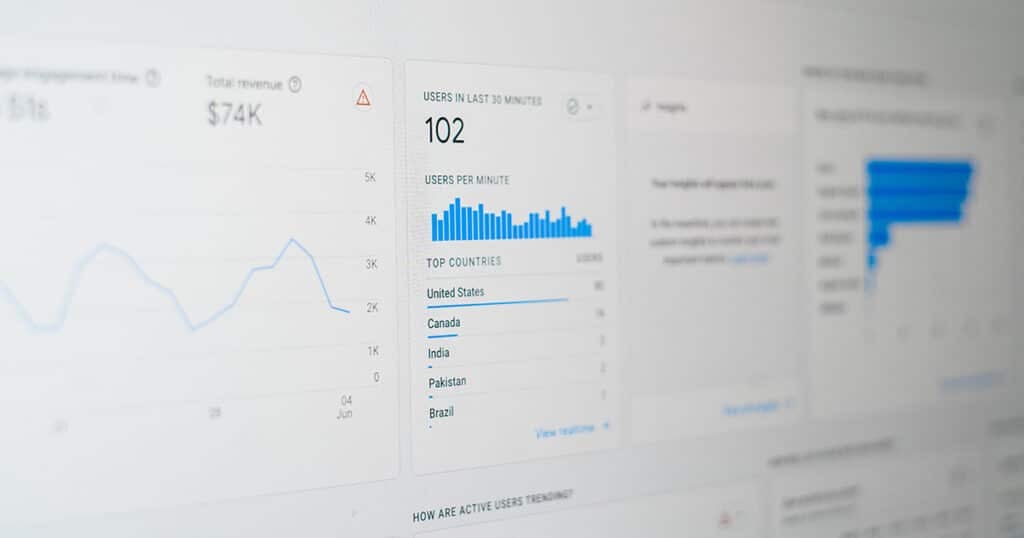
Track AI search traffic separately from traditional search within Google Analytics 4 or your choice of analytics platform.
Segmenting referral visitors from ChatGPT, Gemini and Copilot allows you to accurately measure conversion metrics and user engagement.
Combining strong search engine foundations with generative engine optimisation best practices will position your brand to capture high-intent buyers regardless of how they search online.
Frequently Asked Questions
What is Generative Engine Optimisation?
Generative engine optimisation is the practice of structuring website content so artificial intelligence models can easily read, trust and cite your brand inside generated answers.
Is AI search replacing organic search traffic?
No. Traditional organic search still sends the majority of overall web traffic. However, AI search is growing rapidly and sends visitors with significantly higher purchase intent.
Why do AI search visitors convert better?
AI tools compress the research journey by evaluating options inside the chat interface. Visitors arrive on your site pre-qualified and ready to make a buying decision.
How often should I refresh my website content?
Key commercial pages and data-heavy content should be updated every three to six months. Outdated pages are three times more likely to lose citations in AI search outputs.
Do I need separate content for SEO and GEO?
Separate content is not required. GEO enhancements like answer capsules, structured data and clean heading hierarchies layer directly on top of proven SEO foundations to benefit both channels.
How do I track AI search visitors to my website?
Web analytics platforms allow you to create custom segments for referral traffic coming from AI platforms like ChatGPT, Claude, Gemini and Perplexity.