AI tools, social platforms and paid ads are all competing for attention in 2026 so you might fairly wonder whether a website’s design still matters.
The answer is a definitive yes. A well designed website shapes user experience and builds instant trust while also improving SEO performance and driving higher conversion rates.
Core Benefits of Great Web Design
Visitors judge your site in just 50 milliseconds. That snap judgement dictates whether they stay and convert or leave to a competitor. Good website design removes friction and builds credibility instantly.
Mobile responsiveness is also vital since most internet traffic comes from mobile devices. We test layouts on real devices to ensure performance holds up across all connection speeds.
Key advantages for businesses that adopt high-quality web design include:
- Clear communication of brand values
- Accessible and intuitive navigation
- Faster page load speeds
- Seamless mobile browsing experiences
- Higher overall conversion rates

What Is Web Design Today?
Modern web design is the combination of visual design, user experience (UX), interaction design, front-end development and content strategy that shapes how a business website works and feels.
It’s not just about picking fonts and colours. It encompasses performance, accessibility, security and third-party integrations.
The difference between web design and web development matters too.
Design is how a site looks and works from a visitor’s perspective. Development is the code, infrastructure and integrations that make it run.
At White Peak Digital, we deliver both as a unified service because effective web design connects organisations with their digital audience – and that requires both disciplines working together.
Behind a user friendly, modern site you’ll find platforms and technologies like WordPress, Shopify, WooCommerce, HTML, CSS and JavaScript. The core components of contemporary web design include:
- Visuals – branding, layout, typography, imagery, animations
- Structure – site architecture, information hierarchy, intuitive navigation
- UX – accessibility, forms, calls to action, guiding users through a journey
- Content – messaging mapped to buyer intent, social proof, micro-copy
- Technology – responsive code, speed optimisation, Core Web Vitals, security

Why Web Design Is Still Important for Businesses
Here’s the data that answers “is web design important?” definitively. Users judge websites in just 50 milliseconds.
That snap judgement determines whether visitors perceive your brand as credible or amateur.
A website functions as a 24/7 communication channel that never sleeps and it’s often the first touchpoint potential customers have with your business.
Speed alone has measurable commercial impact. Deloitte found an 8-10% sales drop for every 100-millisecond delay in page load.
That same principle applies whether you sell software or supplements. Poor design can drive potential customers straight to competitors, while good design can boost conversion rates significantly.
Every design decision – page layout, navigation, typography, colours, micro-copy, form fields – either reduces or increases friction for users.
A well designed website removes barriers. A poorly designed one creates them.
For Australian SMEs competing across Brisbane, Sydney, Melbourne and beyond, web design is a crucial factor in online revenue growth.

First Impressions, Brand Image & Building Trust
Your website is the first touchpoint for most prospects. It replaces the shopfront, the brochure and often the first phone call.
First impressions reflect your brand’s credibility and quality, and customers judge trustworthiness in those critical 50 milliseconds.
Consistent branding across pages reinforces brand identity. When your logo, colours and typography are coherent throughout your site, visitors instantly recognise your brand and feel a sense of professionalism.
A modern website design signals credibility and trustworthiness, while clean layouts build instant credibility.
Key design elements for building trust include:
- Clear contact details with a phone number listed
- An SSL certificate and visible security indicators
- Reviews, testimonials and case studies from real people
- Industry accreditations and certifications
- Consistent brand personality expressed through visuals and messaging
One of our recent web design projects illustrates this perfectly. A well-funded SaaS startup was running aggressive LinkedIn outreach but sending prospects to a generic, AI-generated site.
It lacked trust signals, failed to explain a complex product and had a leaky conversion funnel.
We scrapped the template and built a custom, narrative-driven website mapping the exact psychological journey from cold LinkedIn message to demo booking.
The result was a 4x increase in monthly demo bookings from the same cold outreach channel.
Why a User Friendly Website Drives Results
User experience is how easily visitors can find what they need, understand your offer and take the next step without confusion.
Good web design improves user experience by enabling easy navigation, readable typography, accessible design and obvious calls to action.
Good design practices contribute to higher conversion rates because they reduce friction at every stage.
We saw this firsthand at White Peak Digital with a rapidly growing eCommerce postpartum brand on Shopify. Despite strong traffic, mobile cart abandonment was high.
We implemented heat-mapping and session recording using tools like Microsoft Clarity, which revealed users were frustrated scrolling between feature lists and customer reviews.
Our solution was a custom, sticky “Quick-Compare” UI tab anchored to the bottom of the screen, letting users toggle key product benefits and top reviews in a modal without losing their place.
This single, data-backed UI change delivered a 34% increase in mobile add-to-cart conversions within the first month.
UX essentials every good website design should include:
- Intuitive navigation with clear hierarchy
- Legible text and accessible colour contrast
- Touch-friendly buttons and tap targets on mobile devices
- Streamlined forms with minimal required fields
- Prominent CTAs with a compelling offer
- Accessible design for keyboard and screen reader users

Mobile-First & Responsive Design
The global share of website traffic from mobile devices reached 53.65% in early 2026.
Mobile-friendly web design is crucial for user engagement and influences your SEO rankings significantly since Google uses mobile-first indexing.
Responsive web design ensures usability across all screen sizes, from smaller smartphones to large computer monitors.
A user friendly mobile experience means legible text without zooming, tap-friendly buttons, simplified navigation, fast loading and no awkward horizontal scrolling.
Poor mobile design hurts both user experience and SEO performance simultaneously.
SEO Performance & Content Strategy
Web design and SEO are deeply intertwined with logical site architectures helping search engines index content more effectively.
Fast page-loading speeds and clean code are important for search engine visibility, and Google rewards sites that load quickly and are stable through its Core Web Vitals signals.
SEO-friendly code is essential for effective web design and supports SEO performance directly through:
- Semantic HTML with proper heading structures
- Compressed images and lazy loading for faster pages
- Clean site structure with logical internal linking
- Technically sound and secure platforms
- Schema markup for rich search results
Content strategy plays an equally important role.
Mapping content to user journeys (e.g., creating service pages, FAQs and resources that answer real search queries) means your visually appealing site also attracts organic traffic via SEO from traditional and AI search engines.
A fast-loading website reduces bounce rates and increases conversions, which further reinforces your SEO performance over time.

The ROI of Great Website Design
Conversion Rate Optimisation (CRO) is the process of improving how many visitors take key actions on your website (e.g., make an enquiry, demo request or purchase) through design and UX tweaks.
Web design can provide a competitive advantage in a crowded market because it directly shapes the ultimate goal: turning website visitors into customers.
Good website design bakes CRO into the build from day one: clear CTAs, persuasive messaging, social proof, streamlined forms and reassuring checkout flows for eCommerce websites.
Our postpartum eCommerce project (34% mobile conversion lift) and SaaS start-up project (4x demo bookings) are concrete ROI examples of what targeted layout, messaging and interaction changes deliver.
Core metrics to track after a website redesign:
- Conversion rate (overall and by channel)
- Average order value (eCommerce)
- Lead volume and quality
- Bounce rate and session duration
- Page load times and Core Web Vitals scores
- Revenue compared before and after launch
Storytelling, Immersive Experiences & Differentiation
In competitive markets, web design becomes a key brand storytelling and differentiation tool.
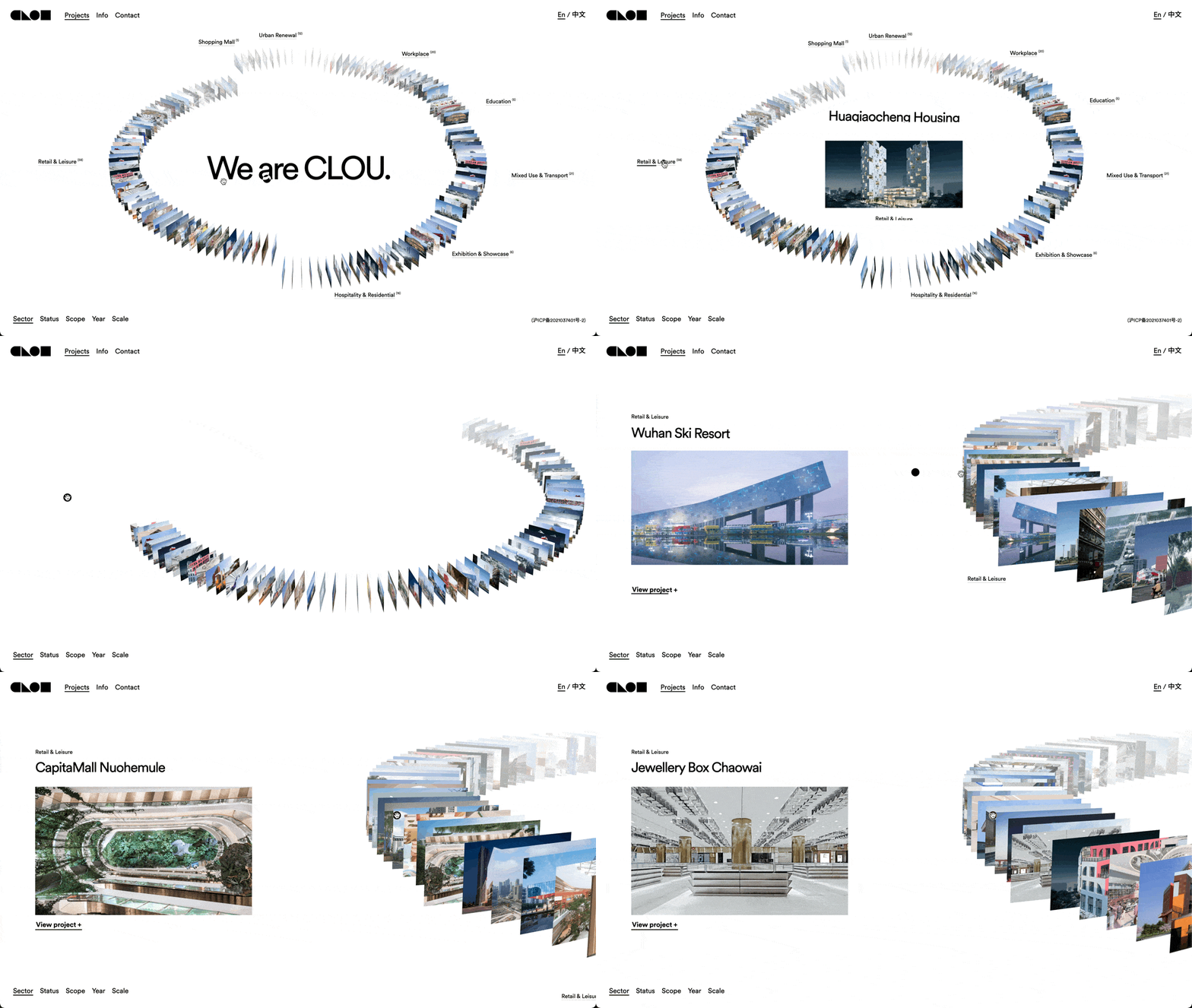
Visual storytelling through animations, interactive product tours and micro-interactions transforms a static brochure into an experience that engages visitors and communicates brand personality in ways competitors can’t easily replicate.
We proved this with a high-end architectural firm. Their competitors all relied on standard photo galleries to showcase multi-million dollar homes.
We leveraged GSAP to develop a fully immersive, interactive web experience. Instead of static images, prospects explored buttery-smooth scroll animations and interactive 3D models they could rotate directly in their browser.
The result: dramatically increased time on site from prospects and a new website benchmark in their industry for visual appeal and brand prestige.
Storytelling techniques a beautiful website design can employ:
- Scroll-driven narrative flows that guide users through a story
- Interactive 3D models and product visualisations
- Video and motion design woven into the page layout
- Micro-interactions that reward exploration
Frequently Asked Questions
How often should a business redesign its website?
Most established businesses benefit from a major redesign every 3–5 years, with continuous smaller improvements in between.
Shifts in brand positioning, services, SEO performance or user behaviour are triggers to review sooner. Analytics, heatmaps and audits can reveal whether you need a full overhaul or targeted UX and conversion optimisation work.
Can a small business rely on templates and AI tools instead of professional web design?
Templates and AI website builders can work as a short-term starting point for very early-stage businesses with limited budgets.
However, for growing SMEs, generic designs usually limit credibility and conversion rates. Custom, strategy-led design is what unlocks serious gains once a business is past early validation.
Which platform is best for a good website design: WordPress, Shopify or WooCommerce?
WordPress suits content-driven and lead-generation sites and Shopify is ideal for most eCommerce brands wanting speed to market while WooCommerce is powerful for WordPress-based stores needing flexibility.
Design quality depends more on implementation than on the platform itself. White Peak Digital designs on all three, recommending the best fit based on your business model and growth plans.
How do I know if my current web design is hurting my SEO performance?
Warning signs include falling rankings, slower page speed scores, high bounce rates, poor mobile usability and hard-to-crawl site structures.
Running technical and content audits can uncover specific issues like bloated code, missing semantic HTML headings or thin content. Sometimes restructuring navigation and page templates can unlock SEO gains without replacing every piece of content.
What does working with White Peak Digital on a redesign typically involve?
Our typical process includes a discovery workshop, UX and content planning, custom web design, development, thorough testing and launch.
After go-live, we offer ongoing support through conversion rate optimisation services, technical SEO migrations, website maintenance and care plans to keep your site performing.